Dr. Gymbro
←

#drop jumps

1 article
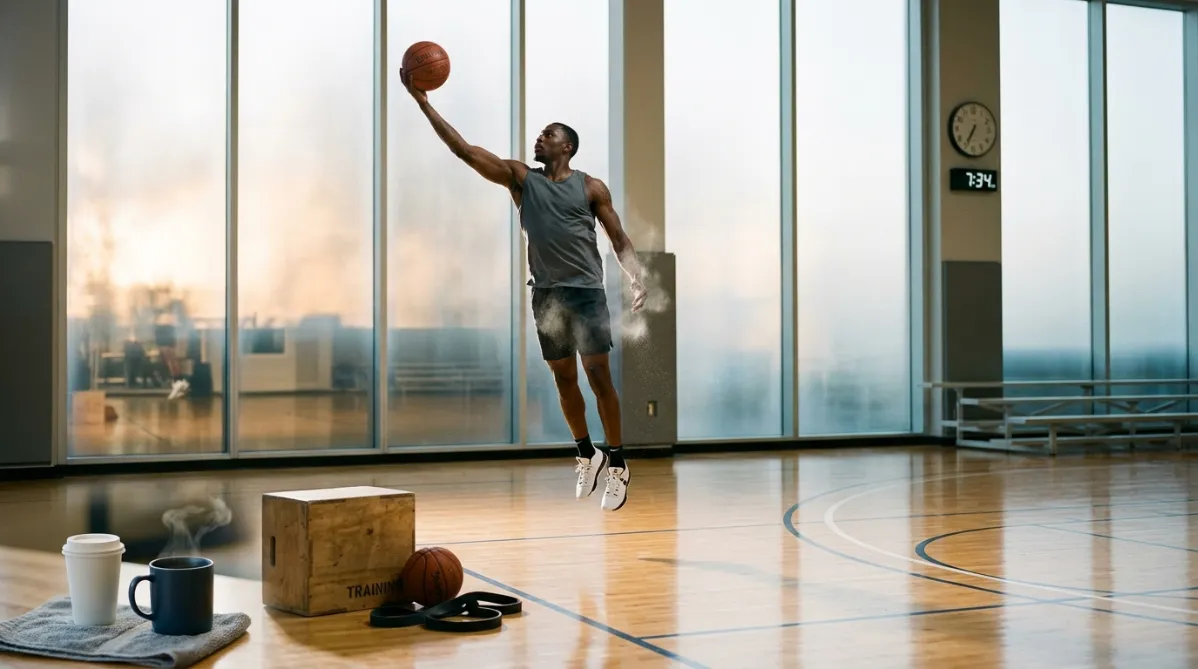
A wide, editorial-style photograph of a basketball player mid-air at the top of a vertical jump inside a sunlit indoor court, shot from a low angle so the athlete's silhouette rises against tall frosted windows glowing with soft morning light. The player wears a plain charcoal tank and white sneakers, with chalk dust drifting off their hands and catching the light. The polished honey-toned hardwood floor reflects the figure faintly, with crisp painted court lines leading the eye across the frame.

In the foreground at the lower left, slightly out of focus, a small wooden plyometric box sits on the floor beside a matte ceramic cup of black coffee and a plain white paper cup, placed neatly on a folded gray towel. Thin steam curls from the ceramic cup. They stand for the question of caffeine versus warm-up without any text or labels.

The color palette is calm and modern: warm amber wood, soft cream, muted slate blue shadows, and a touch of burnt orange from a basketball resting near the box. Light is natural and diffused, with gentle rim lighting on the athlete's shoulders and a shallow depth of field that blurs the background bleachers into creamy shapes. The composition has generous negative space on the right third, suited to a headline overlay, in a clean, contemporary magazine style with fine film grain, subtle contrast, and a quiet, focused mood. No text, no logos, no futuristic elements.
science research

La cafeína antes de los saltos no aportó nada extra; el calentamiento hizo el trabajo

BY DR. GYMBRO ·

Una combinación de cafeína y un calentamiento con saltos en caída parecía una receta para saltos más altos, pero un ensayo con jugadores de baloncesto de élite demostró que el café no añadió ningún beneficio adicional. El protocolo individualizado de salto generó por sí solo un impulso de corta duración. La dosis de 3 mg/kg de cafeína no modificó la altura máxima, el tiempo de pico ni el PAPE total en comparación con el placebo. Las respuestas individuales fueron muy variables, de modo que algunos atletas pueden reaccionar de forma distinta. Aquí analizamos qué muestra el estudio, qué no muestra y cómo diseñar tu propio protocolo de salto.

This page is available in